_Cropped copy.jpg)
Description: Christ and his disciples at the table in the house of Simon the Leper, with Mary Magdalene and Martha serving. Illuminated manuscript. Circa 1503-4. Artist unknown.
By John Dickson
THE NEW Testament word for hospitality philo-xenia is a wonderful concept because it means the love of the xenia, the foreigner, the outsider. It’s a far more daring concept than friendship philia, which is the love of your own kind, your kindred. Philo-xenia is the fruit and mirror of the gospel, where God welcomes us, the outsider, the foreigner.
It’s easy to welcome those with whom we already have an affinity or agreement. Hospitality welcomes those with whom we might have profound disagreement. And that requires grace, which is why the idea of gospel hospitality is so good, because hospitality and gospel go together.
In fact, Paul describes the gospel itself in terms of hospitality. Ephesians Chapter 2: “Remember that at that time you were separate from Christ, excluded from citizenship in Israel, and you were foreigners, outsiders, strangers to the covenant of the promise, without hope, without God in the world. But now in Christ Jesus, you who were once far away have now been brought near by the blood of Christ.”
In the gospels, Jesus epitomized gospel hospitality, the love of the xenos, the outsider, the foreigner, the distant one. On the one hand, Jesus was a preacher of divine judgment; yet Jesus deliberately practiced table fellowship with those you might have thought were first in line for judgment. Whether the self-righteous Pharisee Simon or the distant sinner Zacchaeus, Jesus was the very definition of Gospel hospitality.
Let me tell you, though, how I first came across this Jesus and his gospel hospitality. I was raised in a very typical Australian home with no religion. Not once did we say a prayer. Not once had I been inside a church before I was 16. But I learned about Jesus’ hospitality the easy way, through a Christian who practiced Jesus’ hospitality. This woman, Glenda Weldon, was a volunteer teacher at my high school, and a very open Christian.
She was also very smart and funny. I traded my way through school by asking smart-aleck questions designed to make teachers look silly and get a laugh in the class. It never worked with this woman – she always had something clever to say in response.
Back then, she did what really would be illegal today. She invited anyone who was interested in the Christian faith to come to her home on Friday afternoons after school, where she would feed us.
So my mates and I turned up at her lovely Sydney house, just 500 metres from the school, and devoured her hamburgers, milkshakes and scones. She fielded our questions about the Christian faith. And she read portions of the gospels to us. She knew that we knew nothing so she went to the heart of it. She said, “I’ll get as many Jesus stories across as I can until they give up.”
But I’m here to say this woman’s hospitality and generosity over many Friday afternoons for the next two and a half years was the means of God leading me and several of my friends, including my best mate, to Jesus Christ. Three from that one class, all little Aussie pagans, ended up going into full-time ministry.
Glenda put up with so much from us – sometimes we turned up 20 Aussie pagans at her door when she was expecting five or six. And sometimes we didn’t turn up at all when we said we would. Once we stole from her. We pinched her DVD player for drug money (not me). And she knew that we had taken it. And the next week, all she said was, “I seem to have misplaced my DVD player. If any of you hear where it might be, that’d be great.” But she kept on welcoming us.
In those days, I had no idea there was such a thing as a bigoted Christian, a Christian who would look down on you, who would shun you and judge you. That’s something I only learned later when I became a Christian and started attending church.
In those early days, Glenda epitomized one of the most striking and beautiful features of Jesus, for he was known as the friend of sinners.
Who are the sinners Jesus is constantly wining and dining with? The underdog, the misfits of society? Or the utterly wicked, the Jews who systematically or flagrantly transgressed, and who were therefore like Gentiles, except even more culpable? To a scrupulous Pharisee, pretty much everyone was a sinner if you didn’t follow the Pharisaic oral tradition.
Jesus actually thinks all people are sinners. And from his perspective, that means someone who stands under divine judgment.
Contact with sinners was heavily regulated in this period. Merely being in the presence of a sinner actually could threaten your own purity. If a tax collector entered your home, the whole house was unclean. Tax collectors were thought to be worse than thieves.
Sharing meals with such people was considered a particularly dangerous spiritual moment because to share food in this culture of first century Galilee and Judea was an expression of fellowship and intimacy and endorsement. Ancient Judaism viewed meal times as important occasions for drawing boundaries. Dining created an intimate setting in which one nurtured friendship with the right kind of people. Unclean people and objects constantly threatened to corrupt God’s holy elect nation and individuals with them. Sin was thought to be a virus, and meals were super-spreaders.
Yet Jesus, as the friend of sinners, regularly ate and drank with “the wrong people.” The Pharisees saw this and asked his disciples, “Why does your teacher eat with tax collectors and sinners?”
In Luke 7, Jesus says, “The Son of Man has come eating and drinking and you say, ‘Behold, a glutton and a drunkard, a friend of tax collectors and sinners.’” I don’t for a moment think Jesus was a glutton or a drunkard, but I like to think he would have worn the badge ‘Friend of sinners.’ This was central to his ministry.
We have this quite extraordinary passage in Luke 19 of a wealthy chief tax collector in Jericho named Zacchaeus. He wanted to see who Jesus was, but because he was short, he could not see over the crowd, so he climbed a sycamore fig tree for a better view. When Jesus saw him, he said, “Zacchaeus, come down immediately. I must stay at your house today.” So, he came down at once and welcomed him gladly. All the people saw this and began to mutter.
Jericho was a wealthy resort town and the chief tax collector of Jericho was one of its wealthiest citizens. Zacchaeus was not a poor, stigmatized underdog. And this is worth pondering, because God doesn’t just love the dejected sinners, he loves the extravagant and arrogant sinners as well.
It isn’t just the misfits. It is the wicked, the secular. Jesus embodied God’s love for them. He became their friend at the risk to his reputation. And he did it, of course, in order to save sinners. Zacchaeus said to the Lord, ‘Look, Lord, here and now I give half my possessions to the poor. If I have cheated anybody out of anything, I will pay back four times your amount.’ Jesus said to him, “Today, salvation has come to this house. This man, too, is the son of Abraham that the Son of Man himself came to seek and to save.”
The order of this narrative is crucial, and we could reflect on it. Christ first extends his grace to the sinner. Jesus stops, looks up, says, “I must come to you today.” The initiative is all Jesus. The grace is all on his side. And then it’s in response to this hospitality of Jesus, that Zacchaeus, overwhelmed by grace, makes that extraordinary vow to give away his wealth and pay people back four times what he owes them. Grace responded to with action.
For Jesus, sin isn’t the contagion, grace is the contagion or better, grace is the medicine. Grace in this passage is transformative. It welcomes Zacchaeus; it saves Zacchaeus; it inspires in Zacchaeus this extravagant giving away of his wealth. Grace demands transformation.
New Testament scholar E.P. Sanders wrote a popular book that gave our culture the notion that Jesus’ meals with sinners had one message only: “God loves you just as you are.” That Jesus never called people to repentance or transformation. There was no moral judgment or transformation implied. And we often hear this thrown back at us by the public: “If your Jesus was so welcoming of everyone, just as they are, why are you so judgmental?”
Now, partly this is our fault because we are, frankly, sometimes judgmental. But it’s also because people don’t want grace to be transformative. Not only is the Zacchaeus story an example of grace transforming, but explicitly in a passage like Luke 5, Jesus responds to his critics:
“But the Pharisees and teachers of the law complained to Jesus’s disciples, why do you eat and drink with tax collectors and sinners? And Jesus answered them, ‘It’s not the healthy who need a doctor. I have not come to call the righteous, but sinners to repentance.’”
The whole metaphor of a doctor suggests transformation, healing, remedy. Jesus welcomed people to his table, yes, but he expected grace to transform them.
His table fellowship with sinners implied no acquiescence in their sins, for the gratuity of the reign of God canceled none of its demands. But in a world in which sinners stood ineluctably condemned, Jesus’ openness to them was irresistible. Contact triggered repentance.
Jesus’ message was not “God loves you just as you are.” His message was “Come and sit at my table, receive grace that will transform.” And of course, this is nowhere clearer than in his death on the cross where, according to his own words, his blood was shed to establish the new covenant of forgiveness of sins. His cross achieved what his meals embodied. There is therefore a direct connection between Jesus’ scandalous practice of hospitality and the gospel of grace.
Hospitality, love of the outsider, is a fruit and mirror of the gospel. Hospitality doesn’t just do the easy thing of loving those with whom we have affinity or agreement. It does the difficult thing of loving the outsider, just as God in Christ has loved us. Hospitality is grace. And Jesus’ radical hospitality offers us a model for our practical hospitality toward our de-Christianizing world.
Our fractured world has lost the moral imagination that enables us to disagree and love at the same time. A culture of grace easily disagrees and loves. If you’ve been captured by the grace of God, you know God loves us despite our sins. As C. S. Lewis pointed out, there’s a perfect analogy in the fact that we tend also to love ourselves despite our sins.
And so, it should be second nature for the Christian to be able to love the xenos despite their sins. That’s a grace culture. But a graceless culture has lost this ethical imagination. Now it’s common to equate disagreement with bigotry. Have you noticed that if you don’t agree with me and affirm me, you don’t respect me, you don’t care for me?
When I first learned about Christ, I had no difficulty believing that God and Christians loved me, despite the fact that I was a very public jerk. And the reason was my teacher, the friend of sinners. When you have a Christian like that in your life, it is the easiest thing to believe in the God of grace.
Glenda died almost seven years ago. I was blessed to have someone like that in my life as my entry to the Christian faith. But even if we don’t have someone like that, we do have Christ himself, the ultimate friend of sinners, whose death on the cross secured the love of the outsider.
May we offer this fractured world gospel hospitality. TAP
This is an abbreviated version of the talk Dr. John Dickson gave at the Mere Anglicanism Conference held Jan. 18-20 in Charleston, S.C.

IN THE GOSPEL LESSON for this first Sunday in Lent, we have Saint Matthew’s account of the temptations of Jesus. This lesson is clearly intended to establish in our minds the meaning and the message of the Lenten season, and we should examine it with careful attention. And perhaps before we do that, it would be useful to think for a moment about the background and context of the story.
continue reading
According to Jonathan Haidt’s and Greg Lukianoff’s book The Coddling of the American Mind, the spike in anxiety and depression is also related to “Great Untruths” that have spread across our culture, but are especially powerful among current college students born 1995 or later – Generation Z and Generation Alpha. These “Untruths” relate to Fragility, Emotional Reasoning and an Us vs. Them understanding of the world. Haidt and Lukianoff may be on to something.
continue reading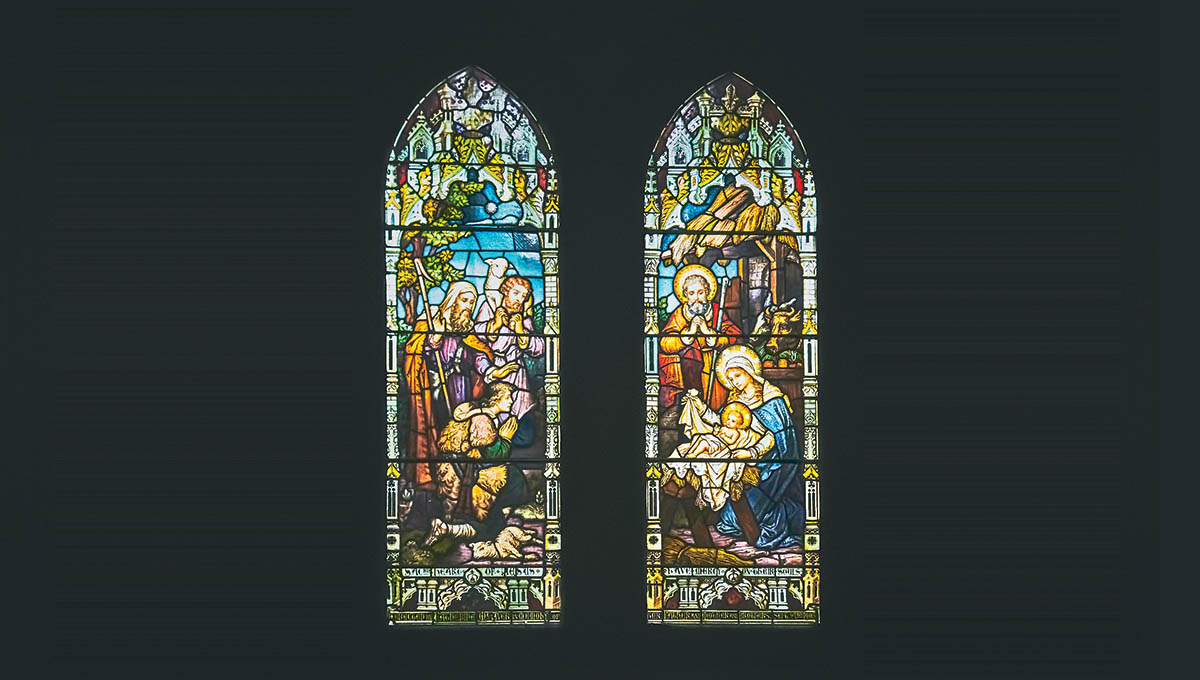
HAVE YOU EVER been envious of the shepherds that first Christmas night – when they had all those angels speaking to them, telling them about God – or felt how wonderful it would have been to be Mary and have God speak directly to you about his plans for your life?
continue reading
THE DIOCESE OF BRANDON has a new bishop-elect. On Nov. 25th the Ven. Rachael Parker was chosen on the second ballot by 21 clergy and 28 laity. She succeeds Bp Willliam Cliff who served the diocese for seven years from 2016–2023 and who is now Bishop of Ontario

(Staff) HEALTH Minister Mark Holland says Canada is not ready to expand eligibility for assisted death to people whose only medical condition is a mental illness.
He said the Liberal government agrees with the conclusion of a joint parliamentary committee report, released on Jan. 29, that more time is needed before such an expansion can happen. The report concluded that fundamental issues around the expansion have not yet been resolved.
THE NEW Testament word for hospitality philo-xenia is a wonderful concept because it means the love of the xenia, the foreigner, the outsider. It’s a far more daring concept than friendship philia, which is the love of your own kind, your kindred. Philo-xenia is the fruit and mirror of the gospel, where God welcomes us, the outsider, the foreigner

Ephraim Radner, professor emeritus of historical theology at Wycliffe College in Toronto, is author of A Time to Keep: Theology, Mortality, and the Shape of a Human Life (Baylor, 2016). An Anglican cleric, he has served as a missionary in Burundi and Haiti, and taught and pastored in the United States. He spoke with Faith Today’s Bill Fledderus about death and birth, and why he views it as essential for Christians to oppose medically assisted dying.
Copyright © 2024 The Anglican Planet. All rights reserved